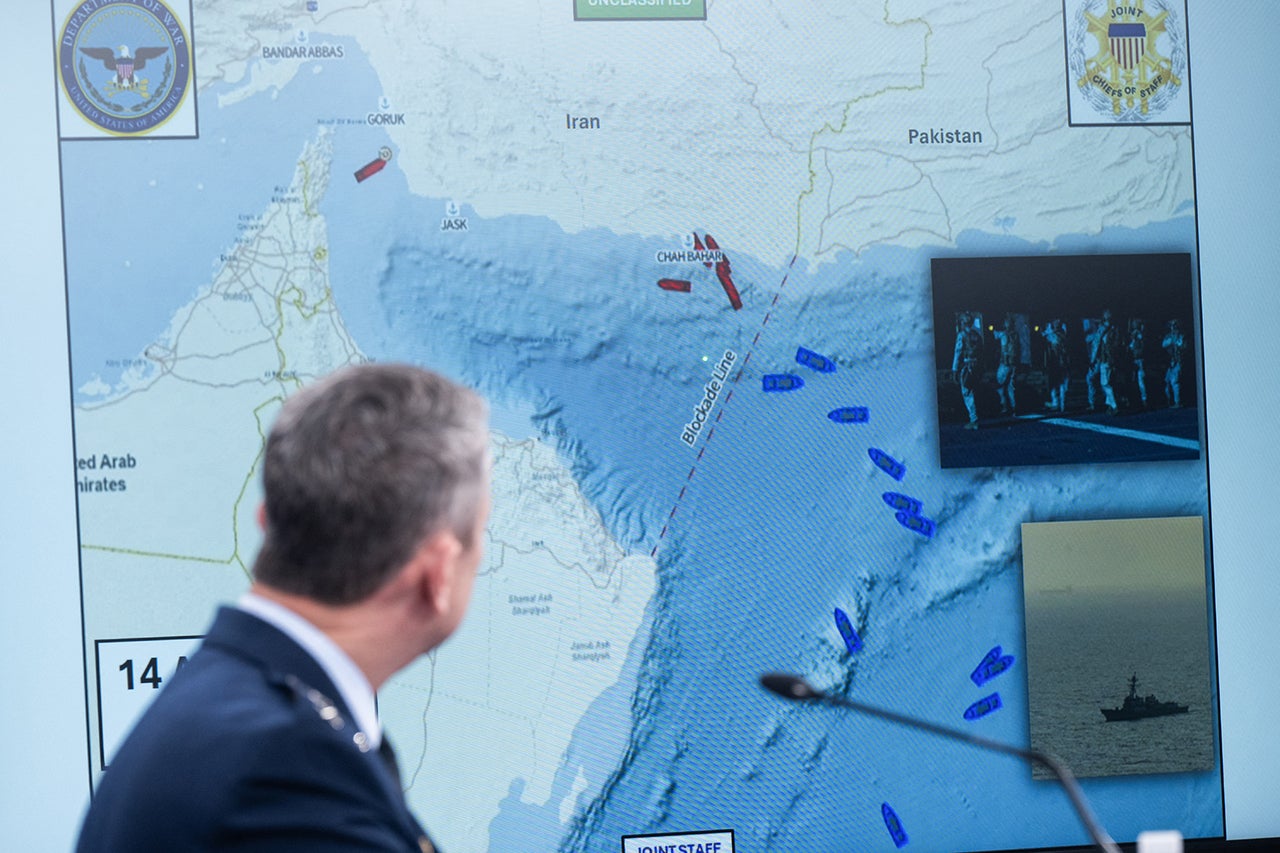
American motorists, hoping for relief at the pump, wondered how quickly gasoline prices might fall once oil tankers stuck in the Persian Gulf were moving again. A gallon of regular gasoline cost $4.08 on average in the U.S. Friday, which was 37% more than before U.S. and Israel attacked Iran.
But when gas prices spike, they don’t typically drop as quickly as the cost of crude.
Even if Iran keeps the waterway open in the face of a U.S. blockade, it still could take months for fuel prices to return to levels resembling those enjoyed before the war began Feb. 28.
The slow speed at which oil tankers travel from ports to refineries, lingering security concerns, traffic in the strait and damage to energy infrastructure in the Middle East are all playing a role in the elevated price of gasoline.
“The historical observation is that gasoline prices rise quickly but fall slowly, regardless of the particular causes of the increase,” said Mark Barteau, a professor in the department of chemical engineering at Texas A&M University.
“In this case, one has to take into account the time it takes for the steps that have to happen once tankers sail through the straits – for example, sailing time to refineries on other continents, time to ramp up refinery operations, and time to transport some refined products by tanker to the continent where they will be used,” Barteau said. “There is also tendency to hedge bets because of doubts about whether and how quickly that restoration might occur, and whether further disruptions are possible along the way.”
If an agreement to end the war is reached, it could take at least four months for shipping through the Strait of Hormuz to go back to normal, said Patrick Penfield, professor of supply chain practice at Syracuse University.
If the strait remains open, and ships loaded with oil leave the Persian Gulf, it could take weeks for those heavy, slow-moving ships to reach their destinations.
“People think that once the strait opens, it’s fine. We’re done. It’ll be better really fast,” said Richard Joswick, global head of near-term oil analysis at S&P Global Energy. “If you open the strait today to get a ship and bring it around and take it to Europe and run a refinery, turn it into products, you’re talking 10 weeks of a lag time here. It will be two to three months before things can start to get back to normal after the strait re-opens.”
Many oil production facilities were damaged in the Middle East, including refineries and oil tanker terminals in Iran. Some repairs has been made, but damage remains.
In addition, some countries slowed down or halted production during the war, because without the ability to ship crude through the Strait of Hormuz, their ships and storage tanks filled up with stranded oil.
“It’s not a light switch. Everyone’s impatient and saying, ‘Go, go go,’” De Haan said. “But it will take time to get these flows of oil through the Middle East fired back up again.”
Once an oil well is turned off, the pressure within the well could change, and it can take time to restart the flow.