Foolish Americans claiming "victory"

Abbas Araghchi is a man of his word and has the support of his government.

Donald Trump is not an man of his word and is opposed by many in his own government.

Since the US launched the war, Iran has allowed about 100 vessels through Hormuz.

Trump, in the meantime, has gone from a policy of lifting sanctions on Iranian oil to ease the global supply pressures to seeking to cut it off altogether.

His vacillations must be dizzying to Americans trying to maintain support for him.
Iran is a nothing, dope. They can't sell any oil.
 

Trump Says the Strait of Hormuz Is Open ... Again. About That … I regret to inform you that the president of the United States may not be totally on the level


d4d4099a-8993-4d35-83c9-36c8a397d3e0.jpeg


You’ll be shocked to hear this, but Donald Trump doesn’t seem to know how to handle the Strait of Hormuz.

Saudi Arabia has been itching for Trump to end that blockade, and his simple “thank-you” message to the Gulf royals isn’t likely to satisfy them.
Saidi vessels are not blockaded, dope. They also don't need to ship oil that way.
Iran itself has stated that it considers a blockade to be a violation of its peace deal with the U.S.—a stance it still holds as of Friday.
Iran will have no say.
It turns out there’s still a lot that’s up in the air. And until and unless Trump formally ends the destructive, useless, counterproductive war with Iran he started for no real reason, hardly anyone is going to feel any relief for a while yet.
Iran attacked all of it's neighbors, dope. It continue to try to build nuclear bombs and long range missiles to carry them. Iran's problems are of it's own making. Iran is now isolated and alone.

Oil prices are already coming down. The price of gasoline is already coming down. The DOW is up. Your claim of 'economic catastrophe' is just hollow noise.
Last week’s announcement of a two-week ceasefire between the United States and Iran was conditioned upon the regime’s willingness to open the strait for passage—which it did.
Iran will have no say, dope.
 

World reacts


Politicians and industry welcome Iran's reopening of the vital waterway after tyrant Trump's illegal throttling of ship traffic caused oil prices to spike.

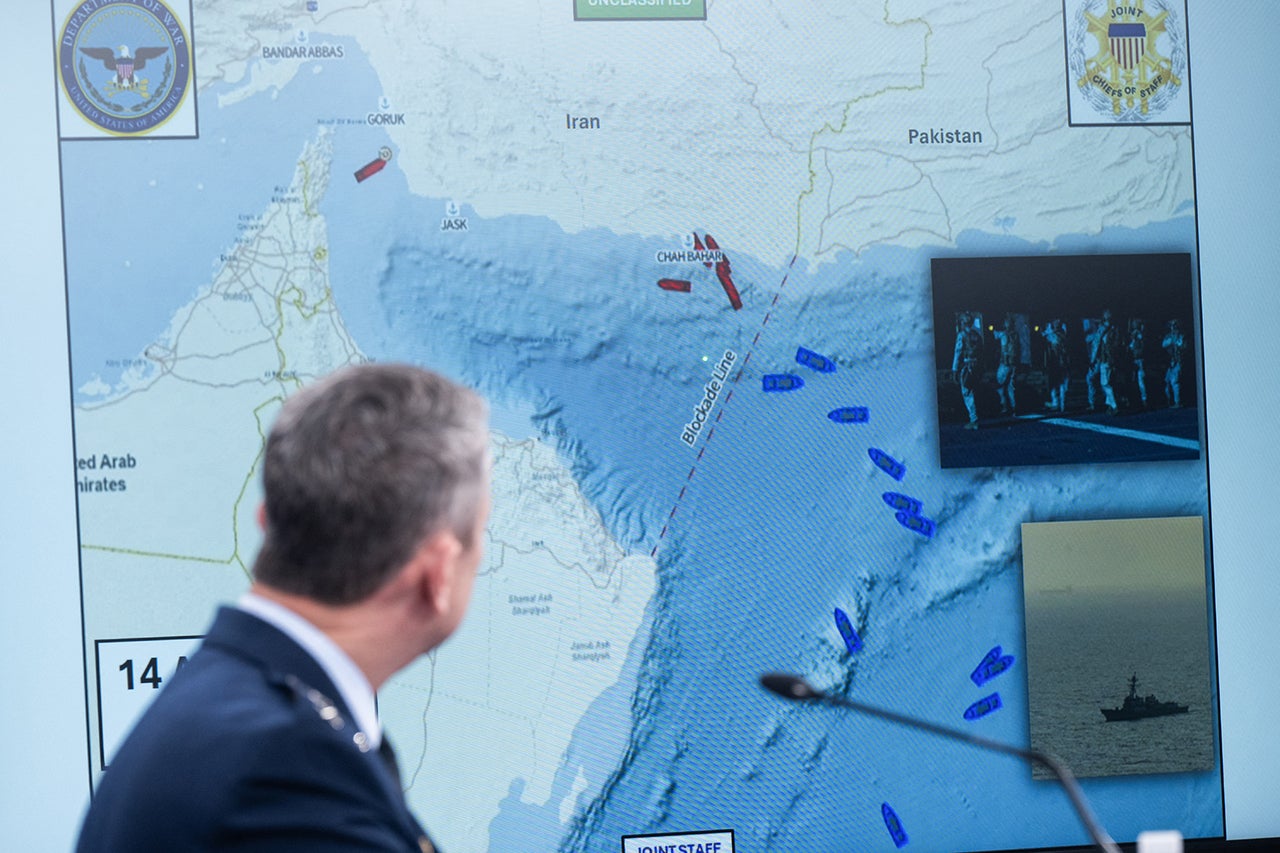
Iran’s Foreign Minister Abbas Araghchi declared on Friday that the strategic waterway was “completely open” despite the piratical attempted US blockade of the vital waterway.

Tyrant Trump affirmed on social media that the strait was open, later claiming that Iran had agreed to “never close the Strait of Hormuz again”.

America's blockade of tankers to and from Iran has led to a global surge in fuel prices.
Iran is a nothing. Oil prices are dropping, dope.
 

A False Dawn in the Strait of Hormuz?


Global energy prices collapsed on Friday morning following an announcement from Iranian Foreign Minister Abbas Araghchi that “passage for all commercial vessels through the Strait of Hormuz” is now “completely open” despite the U.S. blockade.

The move does not represent an acknowledgment by Tehran that it does not and will not control traffic through the Strait.

Iran's Foreign Minister added that "this passage must be conducted along the coordinated and pre-announced route by the Islamic Republic of Iran's Ports and Maritime Organization".
Iran will have no say, dope.
 
The Commander of the Iranian Navy has rejected the tyrant Trump's claims to maintain a maritime blockade against Iran, stating that commercial shipping continues to pass through the Strait of Hormuz without disruption and that U.S. threats will have no impact on our resolve to resist.

The navy commander emphasized that Iranian forces remain prepared, stating that personnel stand ready to defend national interests under all circumstances. He also pointed to repeated U.S. efforts to approach Iranian waters, which, he said, were met with missile and defensive responses.

Commander Irani highlighted that Iran’s capabilities extend beyond missile systems, including advanced drones.
 
The Commander of the Iranian Navy has rejected the tyrant Trump's claims to maintain a maritime blockade against Iran, stating that commercial shipping continues to pass through the Strait of Hormuz without disruption and that U.S. threats will have no impact on our resolve to resist.
Iran will have no say, dope. Iran cannot sell any oil.
The navy commander emphasized that Iranian forces remain prepared, stating that personnel stand ready to defend national interests under all circumstances. He also pointed to repeated U.S. efforts to approach Iranian waters, which, he said, were met with missile and defensive responses.
You and what navy?
Commander Irani highlighted that Iran’s capabilities extend beyond missile systems, including advanced drones.
Iran's little toys can't cause much damage, dope.
 

Traffic and trepidation in the Persian Gulf could keep gasoline prices from dropping quickly


American motorists, hoping for relief at the pump, wondered how quickly gasoline prices might fall once oil tankers stuck in the Persian Gulf were moving again. A gallon of regular gasoline cost $4.08 on average in the U.S. Friday, which was 37% more than before U.S. and Israel attacked Iran.

But when gas prices spike, they don’t typically drop as quickly as the cost of crude.

Even if Iran keeps the waterway open in the face of a U.S. blockade, it still could take months for fuel prices to return to levels resembling those enjoyed before the war began Feb. 28.

The slow speed at which oil tankers travel from ports to refineries, lingering security concerns, traffic in the strait and damage to energy infrastructure in the Middle East are all playing a role in the elevated price of gasoline.

“The historical observation is that gasoline prices rise quickly but fall slowly, regardless of the particular causes of the increase,” said Mark Barteau, a professor in the department of chemical engineering at Texas A&M University.

“In this case, one has to take into account the time it takes for the steps that have to happen once tankers sail through the straits – for example, sailing time to refineries on other continents, time to ramp up refinery operations, and time to transport some refined products by tanker to the continent where they will be used,” Barteau said. “There is also tendency to hedge bets because of doubts about whether and how quickly that restoration might occur, and whether further disruptions are possible along the way.”

If an agreement to end the war is reached, it could take at least four months for shipping through the Strait of Hormuz to go back to normal, said Patrick Penfield, professor of supply chain practice at Syracuse University.

If the strait remains open, and ships loaded with oil leave the Persian Gulf, it could take weeks for those heavy, slow-moving ships to reach their destinations.

“People think that once the strait opens, it’s fine. We’re done. It’ll be better really fast,” said Richard Joswick, global head of near-term oil analysis at S&P Global Energy. “If you open the strait today to get a ship and bring it around and take it to Europe and run a refinery, turn it into products, you’re talking 10 weeks of a lag time here. It will be two to three months before things can start to get back to normal after the strait re-opens.”

Many oil production facilities were damaged in the Middle East, including refineries and oil tanker terminals in Iran. Some repairs has been made, but damage remains.

In addition, some countries slowed down or halted production during the war, because without the ability to ship crude through the Strait of Hormuz, their ships and storage tanks filled up with stranded oil.

“It’s not a light switch. Everyone’s impatient and saying, ‘Go, go go,’” De Haan said. “But it will take time to get these flows of oil through the Middle East fired back up again.”

Once an oil well is turned off, the pressure within the well could change, and it can take time to restart the flow.
 

Inflation, interest rates expected to be 'higher for longer,' survey of economists shows


Bankrate's quarterly survey of economists pegged the odds of a recession in the next year at 34%.

Economists polled by Bankrate also expected slightly worse job growth and slightly higher unemployment than they expected in the previous quarter.

They foresaw modest declines in the Treasury yield. And they didn't see inflation coming down to the Federal Reserve's target until at least next year.

Bankrate senior economic analyst Mark Hamrick said a lot of Americans don’t feel like the economy is working very well for them these days.

The latest consumer price index, a popular measure of inflation, showed an annual rate of 3.3%, following the biggest monthly inflation spike in four years.

Hamrick said Americans are dealing with persistent inflation and major uncertainties.

And he said the uncertainties were reflected in the wide range of labor market predictions offered by the economists.

On average, the economists expect monthly job growth of about 41,000, down from the monthly prediction of about 64,000 they gave for the previous quarter.


Trump supporters call this "winning", don't they?
 
Back
Top