No Energy Realism In Bidenland

With solar and wind, the principles are very well-established science and engineering. Solar has been around for more than a century. Wind power is centuries old even if it has only been applied to electrical power generation for less than a century. Neither is going to suddenly sprout some new scientific principle that will radically change how it works. Batteries are the exact same way. They've been around for about two centuries--not including potential ancient ones that were not really understood. The chemistry of batteries will not change because the periodic table isn't going to suddenly sprout Unobtainum or some other fantasy atom that doesn't already exist.

Innovation in many things isn't going to happen. Tiny, incremental improvements aren't going to suddenly make the useless useful.

The bolded is like saying in the '70's that computers would go nowhere because we have had computers for thousands of years (we have - but not like they were in the '70's).

The amount of time that wind & solar technology have actually been a focus of innovation is a blip.

We're not going to agree on this. There is generally always a "Eureka" moment in any technology that leads to an accelerated leap. People will figure out how to better harness and distribute wind & solar, in ways that no one can imagine right now, and likely in ways that most couldn't even comprehend.
 
No, it's not my opinion. It's a fucking fact. The watt density of sunlight cannot be altered. The conversion rate per solar cell cannot be improved on beyond a certain point, and that point is likely 50% at most--that's nearly triple what current systems manage. You can't alter that solar doesn't work when the sun isn't shining, which is about 50% or more of the time for any given location on the planet.

Wind only works when the wind is blowing. It can't blow too hard or too little, but has to be just the right strength for maximum production. Wind turbines are limited in size based on strength of materials and the amount of power the propeller on one can turn into electric power at the generator.

Both produce DC power that has to be converted to AC creating another expense and loss of energy in doing so.

Batteries are limited by chemistry to their ampacity.

All of that creates a hugely expensive system that then has to be duplicated by reliable power output sources like natural gas.

Nothing offensive. Just that you never offer any real counter-arguments.

Why do you keep re-posting that? I've had that discussion previously, several times. I could respond again, but it would be the same discussion.

Innovation is not limited by what we know today. Future technology is often unimaginable in the present.

There is hydrogen, ammonia, 4th gen nuclear fission and further down the line nuclear fusion.
 
The bolded is like saying in the '70's that computers would go nowhere because we have had computers for thousands of years (we have - but not like they were in the '70's).

The amount of time that wind & solar technology have actually been a focus of innovation is a blip.

We're not going to agree on this. There is generally always a "Eureka" moment in any technology that leads to an accelerated leap. People will figure out how to better harness and distribute wind & solar, in ways that no one can imagine right now, and likely in ways that most couldn't even comprehend.

No, it's not. You really know nothing about how things electric and electronic work. Do you even have a basic understanding of how a generator produces electricity? You certainly don't appear to from that response.
 
No, it's not my opinion. It's a fucking fact. The watt density of sunlight cannot be altered. The conversion rate per solar cell cannot be improved on beyond a certain point, and that point is likely 50% at most--that's nearly triple what current systems manage. You can't alter that solar doesn't work when the sun isn't shining, which is about 50% or more of the time for any given location on the planet.

Wind only works when the wind is blowing. It can't blow too hard or too little, but has to be just the right strength for maximum production. Wind turbines are limited in size based on strength of materials and the amount of power the propeller on one can turn into electric power at the generator.

Both produce DC power that has to be converted to AC creating another expense and loss of energy in doing so.

Batteries are limited by chemistry to their ampacity.

All of that creates a hugely expensive system that then has to be duplicated by reliable power output sources like natural gas.

I'm not opposed to anything that can ultimately be clean, domestic and sustainable.

I might also point out that EVs rely on so many minerals and metals that could vanish if there was a conflict with China over Taiwan.
 
No, it's not. You really know nothing about how things electric and electronic work. Do you even have a basic understanding of how a generator produces electricity? You certainly don't appear to from that response.

Why do you keep trying to convince me? Like I said, we're not going to agree.

The history of innovation has shown us convincingly that things people thought at the time were "impossible" could be done. There are few actual limitations to innovation in any field.
 
Why do you keep trying to convince me? Like I said, we're not going to agree.

The history of innovation has shown us convincingly that things people at the time were "impossible" could be done. There are few actual limitations to innovation in any field.

There are limits. A great many things we use and have today are technology that people a thousand years ago would recognize. As I've pointed out, the limiting factor on solar power is the watt density of sunlight. You can't change that, nor can you change that the Earth rotates meaning much of the time it is in darkness.
You might incrementally improve electric motors and generators, but the basic principles that make them work aren't suddenly going to change.

So, feel free to 'Ignore the science' all you like, but that's where you are and all the wishful thinking in the world won't change that.
 
No, it's not my opinion. It's a fucking fact. The watt density of sunlight cannot be altered. The conversion rate per solar cell cannot be improved on beyond a certain point, and that point is likely 50% at most--that's nearly triple what current systems manage. You can't alter that solar doesn't work when the sun isn't shining, which is about 50% or more of the time for any given location on the planet.

Wind only works when the wind is blowing. It can't blow too hard or too little, but has to be just the right strength for maximum production. Wind turbines are limited in size based on strength of materials and the amount of power the propeller on one can turn into electric power at the generator.

Both produce DC power that has to be converted to AC creating another expense and loss of energy in doing so.

Batteries are limited by chemistry to their ampacity.

All of that creates a hugely expensive system that then has to be duplicated by reliable power output sources like natural gas.

There is hydrogen, ammonia, 4th gen nuclear fission and further down the line nuclear fusion.

I started a thread the other day on hydrogen but didn't see any input from you!

https://www.justplainpolitics.com/s...e-way-on-green-hydrogen&p=4962866#post4962866
 
Last edited:
There are limits. A great many things we use and have today are technology that people a thousand years ago would recognize. As I've pointed out, the limiting factor on solar power is the watt density of sunlight. You can't change that, nor can you change that the Earth rotates meaning much of the time it is in darkness.
You might incrementally improve electric motors and generators, but the basic principles that make them work aren't suddenly going to change.

So, feel free to 'Ignore the science' all you like, but that's where you are and all the wishful thinking in the world won't change that.

I mean, just looking at something like the bolded - you can't envision satellite-based solar panels?

That's what I'm talking about. Things we have barely imagined, or haven't even thought of.
 
I mean, just looking at something like the bolded - you can't envision satellite-based solar panels?

That's what I'm talking about. Things we have barely imagined, or haven't even thought of.

I can and I can also tell you that transmission of electrical power through the atmosphere falls off as a square of the distance. That means your satellite gathers say, megawatts of power and delivers to the planet milliwatts that are unusable. Even laser transmission has it's limits.

Here's an article that tries to be supportive of it.

https://www.energy.gov/articles/space-based-solar-power

This one goes into detail on why it won't work

https://www.businessinsider.com/why-space-based-solar-power-wont-work-2012-3

Anyway, that idea has been seriously considered and the science and economics of it just don't cut it.
 
No, it's not my opinion. It's a fucking fact. The watt density of sunlight cannot be altered. The conversion rate per solar cell cannot be improved on beyond a certain point, and that point is likely 50% at most--that's nearly triple what current systems manage. You can't alter that solar doesn't work when the sun isn't shining, which is about 50% or more of the time for any given location on the planet.

Wind only works when the wind is blowing. It can't blow too hard or too little, but has to be just the right strength for maximum production. Wind turbines are limited in size based on strength of materials and the amount of power the propeller on one can turn into electric power at the generator.

Both produce DC power that has to be converted to AC creating another expense and loss of energy in doing so.

Batteries are limited by chemistry to their ampacity.

All of that creates a hugely expensive system that then has to be duplicated by reliable power output sources like natural gas.

I mean, just looking at something like the bolded - you can't envision satellite-based solar panels?

That's what I'm talking about. Things we have barely imagined, or haven't even thought of.

Of course they can.

https://www.greenmatch.co.uk/blog/2020/02/space-based-solar-power
 

From your site. This requires a wholly new means of getting payloads into space at a fraction of the cost, then finding and fixing numerous other issues with this plan.

While space-based solar power is an innovative concept, we are not able to fully launch a system into space yet. Launching a space-based solar system is very expensive. In fact, the cost is estimated to be about 100 times too high to compete with current utility costs.

One of the causes of the high costs is the high cost of launching the panels to space, which is mostly due to the high mass per watt generated by the current solar panels. In other words, the solar panels are currently too heavy per watt generated to make it feasible.

On the other hand, nuclear is already available and would solve the whole issue at a fraction of the cost. The only thing holding that back is an irrational fear of nuclear power held particularly on the Left, but by the public in general due entirely to a near complete ignorance of how it works and how safe it really is.
 
No, it's not my opinion. It's a fucking fact. The watt density of sunlight cannot be altered. The conversion rate per solar cell cannot be improved on beyond a certain point, and that point is likely 50% at most--that's nearly triple what current systems manage. You can't alter that solar doesn't work when the sun isn't shining, which is about 50% or more of the time for any given location on the planet.

Wind only works when the wind is blowing. It can't blow too hard or too little, but has to be just the right strength for maximum production. Wind turbines are limited in size based on strength of materials and the amount of power the propeller on one can turn into electric power at the generator.

Both produce DC power that has to be converted to AC creating another expense and loss of energy in doing so.

Batteries are limited by chemistry to their ampacity.

All of that creates a hugely expensive system that then has to be duplicated by reliable power output sources like natural gas.

From your site. This requires a wholly new means of getting payloads into space at a fraction of the cost, then finding and fixing numerous other issues with this plan.


On the other hand, nuclear is already available and would solve the whole issue at a fraction of the cost. The only thing holding that back is an irrational fear of nuclear power held particularly on the Left, but by the public in general due entirely to a near complete ignorance of how it works and how safe it really is.

Yes it's not remotely feasible at present but wanted to answer his question.
 
I might also point out that EVs rely on so many minerals and metals that could vanish if there was a conflict with China over Taiwan.
Russian fossil fuel, Chinese solar panels. an reliance on Taiwan..do we make anything in the USA anymore? We've outsourced our infrastructure
 
No, it's not my opinion. It's a fucking fact. The watt density of sunlight cannot be altered. The conversion rate per solar cell cannot be improved on beyond a certain point, and that point is likely 50% at most--that's nearly triple what current systems manage. You can't alter that solar doesn't work when the sun isn't shining, which is about 50% or more of the time for any given location on the planet.

Wind only works when the wind is blowing. It can't blow too hard or too little, but has to be just the right strength for maximum production. Wind turbines are limited in size based on strength of materials and the amount of power the propeller on one can turn into electric power at the generator.

Both produce DC power that has to be converted to AC creating another expense and loss of energy in doing so.

Batteries are limited by chemistry to their ampacity.

All of that creates a hugely expensive system that then has to be duplicated by reliable power output sources like natural gas.

Russian fossil fuel, Chinese solar panels. an reliance on Taiwan..do we make anything in the USA anymore? We've outsourced our infrastructure

TSMC is building a $12 billion fab in Arizona.

https://www.forbes.com/sites/timbaj...c-for-techs-future-in-the-us/?sh=486cd2ae1c8a
 

intel-crane-56a71fa45f9b58b7d0e717f0.jpg


1-1.png


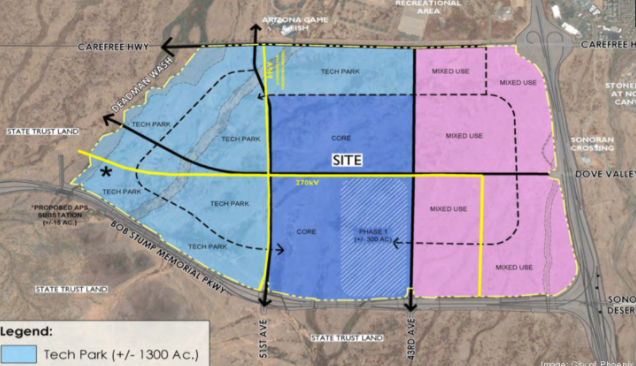
The area marked "Recreational area" at the top of the map (second picture) is Ben Avery shooting range, one of the larger public shooting ranges in the state.

That plant is about ten miles north of where I live. It is gigantic.
 
Unless your way of getting off fossil is going to solar and wind, then you are calling for idiocy.

DEMOCRATS always do.

Putin doesn't need to bomb Western Europe back into the stone age. Their reliance on wind and solar will accomplish the same thing.
 
The area marked "Recreational area" at the top of the map (second picture) is Ben Avery shooting range, one of the larger public shooting ranges in the state. That plant is about ten miles north of where I live. It is gigantic.

I love that part of Arizona.
 
Pretty backwards, imo.

If anything, the current situation shows exactly why we need to get off fossil. It's not just for the environment - it's for the economy, and national security.

Jim & Jack, blah, blah, blah.

Fossils aren't used for fuel. They don't burn. You don't get to dictate energy markets.
 
Back
Top